5/10/2026
Delta Shares Industry Insights on Malaysia’s Next Phase of Infrastructure Growth at Data Centre Nexus 2026
Malaysia’s data center sector continues to grow, driven by rising demand for cloud services, AI and digital infrastructure. As investment expands, the focus is shifting beyond simply adding data center capacity to the broader capabilities and infrastructure needed to support the industry’s continued growth.
As a leading AI infrastructure partner, Delta Electronics is closely engaged with these developments. At Data Centre Nexus 2026, Delta shared its industry experience and perspectives on the opportunities shaping Malaysia’s data center landscape, while engaging with stakeholders across the digital infrastructure value chain.
Held on 14 September at the Hilton Kuala Lumpur, the event brought together government representatives, data center operators, technology providers, hyperscalers and other industry stakeholders to discuss Malaysia’s growing digital infrastructure ecosystem.
Sharing Perspectives on Malaysia’s Data Center Supply Chain
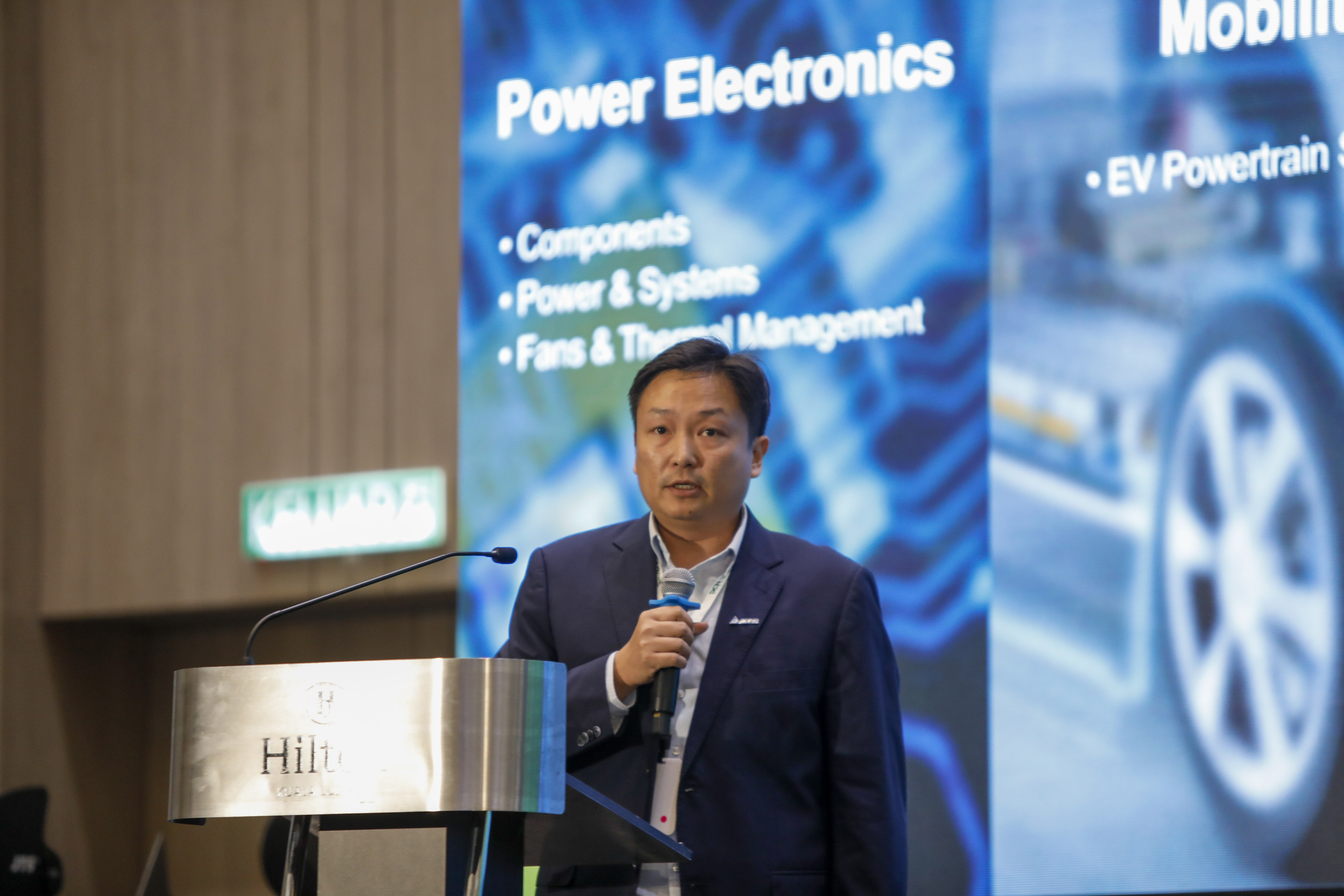
Drawing on Delta’s experience in supporting data center infrastructure across the region, Lee Chang Zer, Head of Information and Communications Technology, Delta Electronics Malaysia, joined a session on Developing Malaysia’s Data Center Supply Chain & Industrial Ecosystem.
The session explored how Malaysia can continue building a resilient data center ecosystem as investments scale, as well as opportunities to strengthen local capabilities, develop higher-value areas of the supply chain and support the evolving requirements of hyperscalers and cloud providers.
Chang Zer shared Delta’s perspective on the infrastructure considerations accompanying this growth, as well as the role technology providers can play in supporting a more capable and resilient data center ecosystem. The discussion also provided an opportunity to exchange views with industry stakeholders on the opportunities and challenges shaping Malaysia’s data centre market, while reinforcing Delta’s commitment to supporting and growing alongside the country’s evolving data center ecosystem.
AI Data Centers in Focus
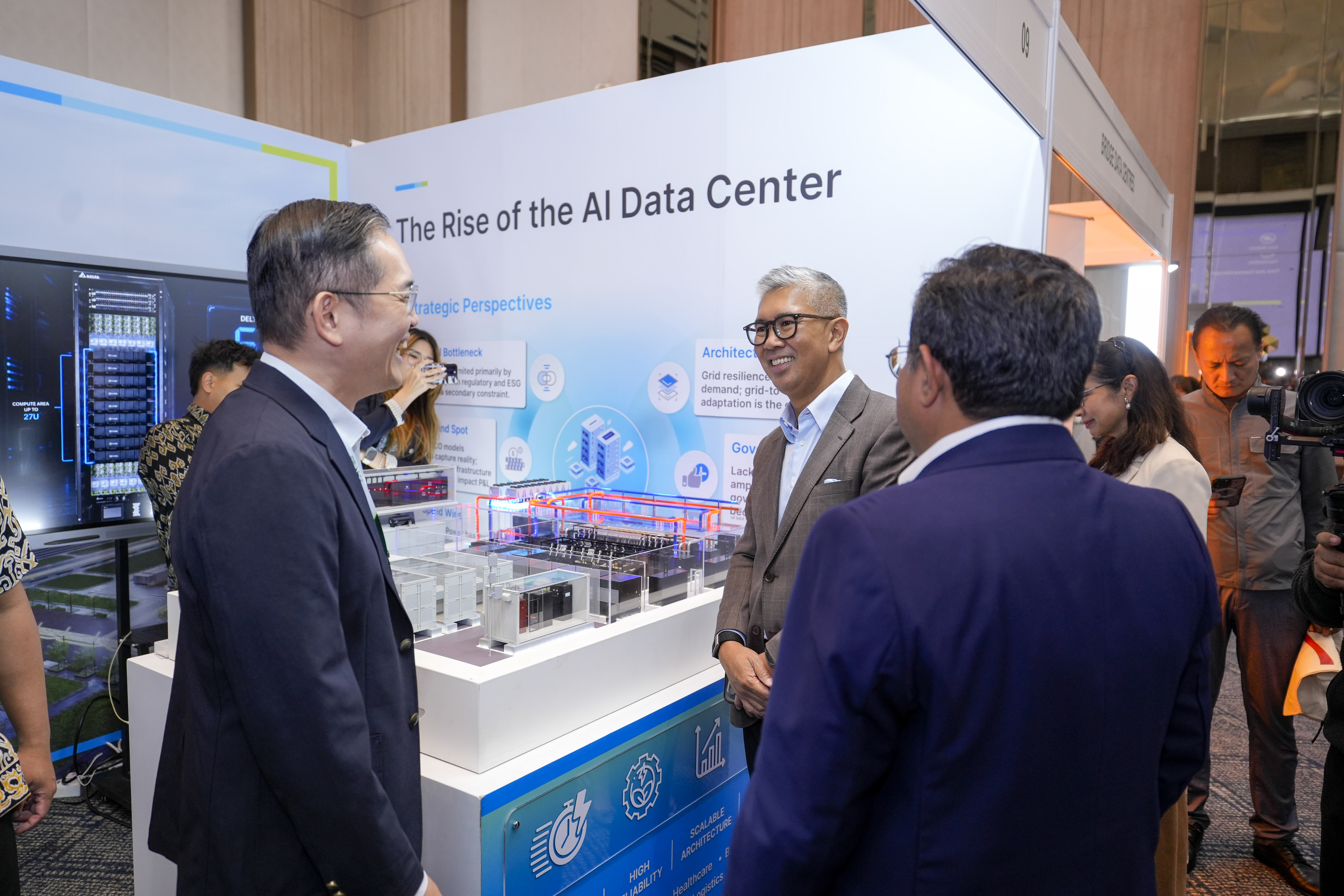
With AI workloads becoming more compute-intensive, data centers across the globe are undergoing a fundamental shift. Higher rack densities are changing how power is delivered, how heat is managed and how infrastructure is designed around increasingly complex workloads.
At Data Centre Nexus 2026, Delta showcased how next-generation data center infrastructure is evolving to meet the demands of AI, high-performance computing, and cloud-driven workloads. Through an interactive AI Data Center 3D Model, visitors gained a comprehensive view of the critical infrastructure ecosystem, from power distribution and cooling systems to rack-level deployment.
As organizations increasingly seek advanced power and cooling solutions such as Power Train Units (PTUs), containerized infrastructure, and Coolant Distribution Units (CDUs) to accelerate deployment timelines and support higher rack densities, Delta demonstrated how integrated solutions can help address these growing requirements. Visitors also explored Delta's GoCool 3MW Liquid-to-Liquid CDU for 800VDC AI Data Centers, highlighting how innovative cooling technologies and next-generation power architectures are enabling efficient, scalable, and sustainable AI-ready data center operations.
These technologies signal a broader shift in data center design. As AI continues to push the limits of conventional infrastructure, power and thermal management need to be designed as part of a more integrated, future-ready infrastructure architecture that can accommodate higher densities, evolving power requirements and future demands.
Through its demonstrations and industry discussions, Delta illustrated how data center infrastructure must evolve alongside rapidly changing AI workloads. By bringing together power, cooling, automation and digital infrastructure across the grid-to-chip ecosystem, Delta helps operators adapt to changing power and cooling demands while improving efficiency, reliability and sustainability for the AI era.