For decades, manufacturing innovation meant building faster, smarter, and more capable machines. Today, however, the competitive advantage lies in how effectively those machines communicate.
Across the industry, manufacturers are moving beyond standalone automation strategies toward connected operations. By integrating equipment, software platforms, and real-time data, they are creating digital ecosystems that improve productivity, increase visibility, and enable faster, more informed decisions.
Integrated automation provides the foundation for this transformation, connecting production systems, warehouse operations, logistics, and facility infrastructure into a single intelligent manufacturing ecosystem.
Breaking Down Silos
Modern manufacturing extends beyond the production line. Material handling, warehousing, logistics, and facility management all generate operational data that influences production performance. Yet these functions often run on separate systems, making it difficult to gain a complete view of factory operations.
Integrated automation connects these domains on a common platform, allowing information to move seamlessly across the factory. Production equipment can communicate directly with warehouse systems, inventory updates can be synchronized in real time, and facility infrastructure can respond dynamically to changing production needs.
The result is a more coordinated operation where teams spend less time reconciling disconnected data and more time improving productivity, quality, and responsiveness.
Leveraging Data
Connecting systems is only the first step. The real advantage comes from turning operational data into actionable insights.
With real-time visibility into equipment performance, production status, and energy consumption, manufacturers can identify issues earlier, optimize resource utilization, and respond before inefficiencies become costly disruptions. Rather than relying on historical reports, production teams gain a live view of what's happening across the factory.
AI strengthens these capabilities by identifying operational patterns, predicting bottlenecks, and highlighting opportunities to improve throughput and reduce waste.
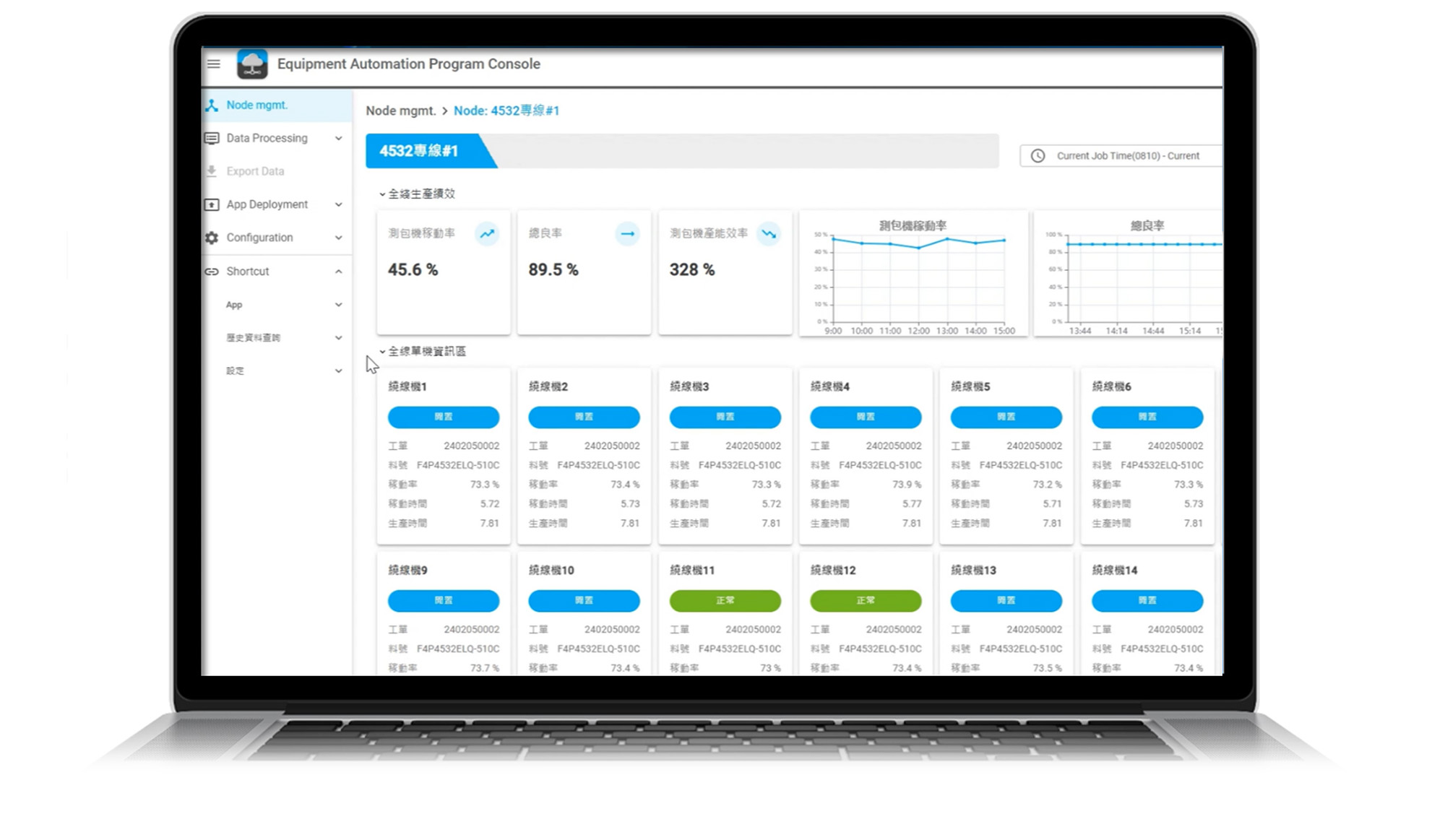
Delta supports this approach through DIAEAP+, which connects equipment across multiple industrial protocols through a low-code platform while applying AI-driven analytics to operational data. DIASECS further simplifies SECS/GEM integration, helping manufacturers reduce engineering effort and accelerate equipment deployment. As factories become increasingly connected, cybersecurity is equally critical. Delta Application Allowlisting (DAA) protects both legacy and modern production equipment against ransomware and unauthorized applications while supporting SEMI E187 cybersecurity standards.
Test Before Deployment
Introducing new equipment or changing production processes often carries operational risk. Digital twins help reduce that uncertainty by allowing manufacturers to evaluate changes before they are implemented on the factory floor.
Engineers can simulate equipment layouts, validate production workflows, and assess performance in a virtual environment, reducing commissioning risks, shortening deployment timelines, and minimizing unplanned downtime. Delta's Equipment Onboarding Suite supports this process throughout the equipment lifecycle. DIATwin enables virtual commissioning, allowing systems to be tested before installation, while integration with DIAEAP+ helps manufacturers transition smoothly from simulation to live production with consistent connectivity and operational visibility.
Make Sustainability Measurable
Sustainability has become a part of everyday operational decision-making. Improving energy efficiency not only reduces emissions but also lowers operating costs and strengthens long-term competitiveness.
To achieve this, manufacturers need a clear understanding of how energy is consumed across production equipment, utilities, and facility infrastructure. Bringing operational and energy data together makes it easier to identify inefficiencies and prioritize improvements.
Delta's VTScada offers this visibility through a unified platform for real-time monitoring, analytics, alarm management, and reporting. By integrating with automation and control systems, VTScada helps manufacturers improve equipment performance, reduce energy waste, and support decarbonization and ESG objectives without compromising productivity.
Connected Factories for Better Outcomes
Successful digital transformation in manufacturing is driven by the integration of technologies, not their individual deployment.
As AI, digital twins, and industrial automation continue to evolve, manufacturers are increasingly investing in connected ecosystems that bring together production, logistics, energy management, and operational data. This integrated approach enables faster decisions, greater operational resilience, and more efficient use of resources.
Manufacturers that embrace integrated automation today will be better positioned to adapt to changing business demands, improve sustainability, and build factories that are not only smarter, but also more resilient and competitive for the future.
Learn more about Delta’s integrated industrial automation solutions here.